

Transmasculine definition
“Transmasculine” is a worthwhile, significant term that applies to any AFAB person who expresses herself in a masculine way. It is efficient for characterizing a cluster of people that incorporates transgender men, masculine nonbinary people, and more.
Because this term is wide, it can be a perfect term for someone who is examining their identity and is not sure whether they are a transgender man or a nonbinary person who strongly undergoes masculinization.
So, what are the main aspects?
Transmasculine person is the individuality who was assigned a female at birth, but who indicates the masculine origin of gender expression.
Assigned sex at birth is often determined to be female based on presence of female genital organs. It is a clear reason to identify a newborn as a female. It is a more respectful alternative to saying that you were “born a woman” or “biologically female.”
Transmasculine is usually applicated to describe:
- transgender men
- AFAB nonbinary people who identify with manliness
- AFAB demiboys (gender identity, describing the person who partially identifies as a man or boy)
- AFAB gender-fluid people (this term denotes or is related to a person who does not have fixed gender but identifies with masculinity)
- other AFAB people who identify with manliness
In other words, the term transmasculine is used by a wide range of individuals, including those who are transgender, non-binary, or intersex.
History
The term «transmasculine» is not as new as it seems at the first sight. It has been used for at least two decades.
It was complicated to determine the origin of the term. The District of Columbia Society of Transmasculinity (DCATS), established in 2000, was one of the earliest known non-profit organizations specializing in transmasculinity.
The opinion of DCATS suggests the term was coined much earlier than the organization appeared.
Transmasculine pride flag
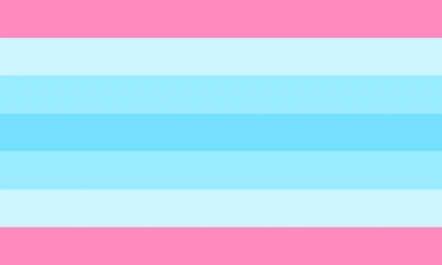
Transmasculine public position
Transmasculinity does not define what gender roles someone performs or does not perform. Trans-masculine people do not always follow what is awaited of men or related with masculinity in their mentality.
How to differ transmasculine, trans man, nonbinary or gender-fluid
Being a trans man to be is not a prerequisite for being transmasculine. The term transmasculine can also relate to nonbinary people who are connected to the term masculinity.
In other words, if you want to use the word transmasculine, you do not need to fully associate yourself with a man.
It is possible for someone to be both transmasculine and nonbinary. Some persons can also be transmasculine and gender-fluid.
The main features of transmasculine
The term “transmasculine” is meant to be used to designate a gender assigned at birth. If someone was designated male at birth (AMAB), they can’t be transmasculine. AMAB people whose personality is associated with the term femininity, however, may use the word “transfeminine.”
If you have any doubts about your gender, it may be difficult to determine which term best suits you.
You can try this Gender Identity Test but be skeptical of its results.
But for a better understanding of your gender and its harmony with your personality, you can do the following:
- Communicate with transmasculine people in online forums or in groups or in real life to learn what it means to be transmasculine.
- Read about the experiences of transmasculine people and ask yourself if you agree. Remember, we all have different experiences.
- Think about what aspects of your gender expression or identity you think are transmasculine.
- Try using the term by calling yourself transmasculine, aloud, or in writing. You don’t have to tell anyone if you don’t wish to do it. Just try it and see what it’s like.
- Make notes about your gender. Sometimes, writing your thoughts and feelings helps to understand everything better.
It is worth underlining, there’s no “right” method to be transmasculine. If you identify as transmasculine, you are transmasculine.
What is the best way to support friends or partners who are transmasculine?
You can support transmasculine people by:
- Deepening your knowledge about transgender identities. This will be an effective way to understand and support them better. Reading this article is a perfect first step!
- Give them a chance to talk to you about their identity, but not make them do it or ask annoying questions. The question of gender can be very private, and it is important to be respectful and loyal.
- If their name was changed, and you are asked to use different pronouns, respect this request. Do not call someone a woman unless they identify themselves as such.
- Don’t “out” them without their consent. We live in a transphobic world, and it may not be safe for them to reveal their gender to everyone.
Primarily, ask them straight away if they have any desires due to how you can support them. It is always important to show respect and kindness and provide support to them according to their own preferences.
How to value your transmasculine personality

There is not a “right” method to be transmasculine. Being transmasculine sounds various to different people.
Transmasculine people may (or may not) transmit their gender uniqueness by different ways: through clothing, hairstyles, care methods, and so on.
Transmasculine people do not need to make a vision or do something a particular way to match their gender. After all, only they can decide what suits them.
Famous transmasculine people
- American musician Anjimile, who has the image of a nonbinary transmasc queer boi.
- Chinese-American autistic disability rights activist Lydia X. Z. Brown is genderqueer, nonbinary, and transmasculine.
- Actor Ellie Desautels identifies as nonbinary, transmasculine, genderqueer, and agenderflux.
- Writer and activist Cyrus Grace Dunham is a transmasculine nonbinary lesbian.
- American comedian, writer, and nurse Kelli Dunham characterizers herself as a genderqueer woman/nonbinary transmasc butch.
- Author, teacher, and therapist Alex Lantaffy.
- English singer, songwriter, actor, and graphic writer Ciarán Strange describes themself as trans, and transmasc.