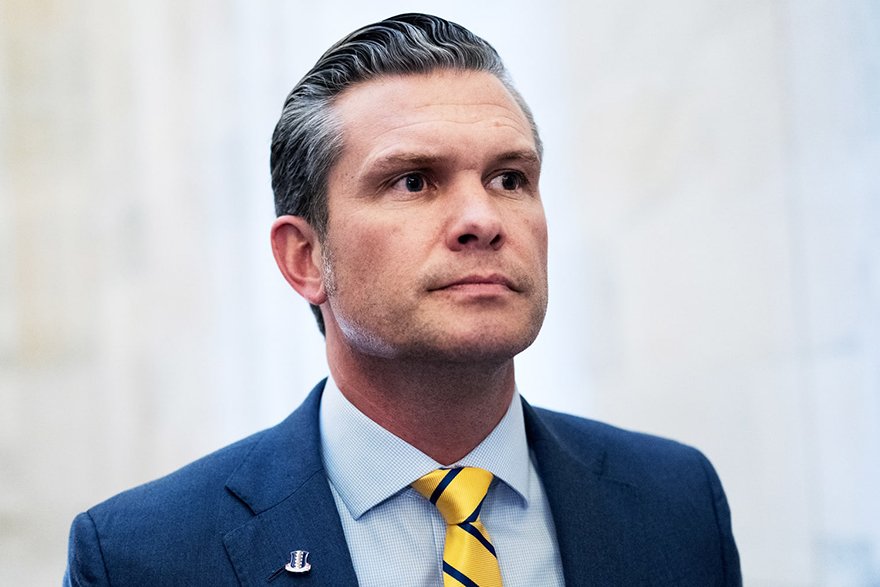
US Defense Secretary Pete Hegseth has officially implemented a ban preventing transgender individuals from enlisting in the US military. The decision follows an executive order signed by President Donald Trump aimed at reinstating restrictions on trans service members.
According to a recently uncovered memo, the ban applies to individuals with a "history of gender dysphoria," barring them from military service. Additionally, the directive mandates an immediate halt to all scheduled or planned gender-affirming medical procedures for active personnel.
Rationale Behind the Ban
In the memo, Hegseth stated that the military must function as "one force," without divisions based on identity. "Efforts to split our troops along lines of identity weaken our force and make us vulnerable. Such efforts must not be tolerated or accommodated," he wrote.
While Hegseth emphasized that transgender individuals currently serving should be "treated with dignity and respect," the long-term status of these service members remains unclear.
Backlash and Legal Challenges
The decision has faced strong opposition from advocacy groups. The Human Rights Campaign (HRC) and Lambda Legal have filed a federal lawsuit challenging the ban, calling it "dangerous and discriminatory." They argue that it undermines national security by excluding qualified personnel who have already proven their capabilities.
HRC Vice President for Legal Affairs, Sarah Warbelow, stated: "Thousands of transgender service members have already met the military’s rigorous standards and have more than proven themselves. Our military must be able to recruit the best candidates and retain highly trained service members. Every qualified patriot should be able to serve free of discrimination."
According to estimates, there are currently around 15,000 active-duty transgender and non-binary personnel in the US military. However, official figures suggest the number is lower.
Public Opinion on the Ban
Polling data from Gallup indicates that 58% of Americans support allowing transgender individuals to serve in the military. However, this represents a decline from 71% recorded six years ago.
As the legal battle unfolds, the policy is expected to remain a contentious issue, with advocates continuing to push for the rights of transgender individuals to serve in the armed forces.