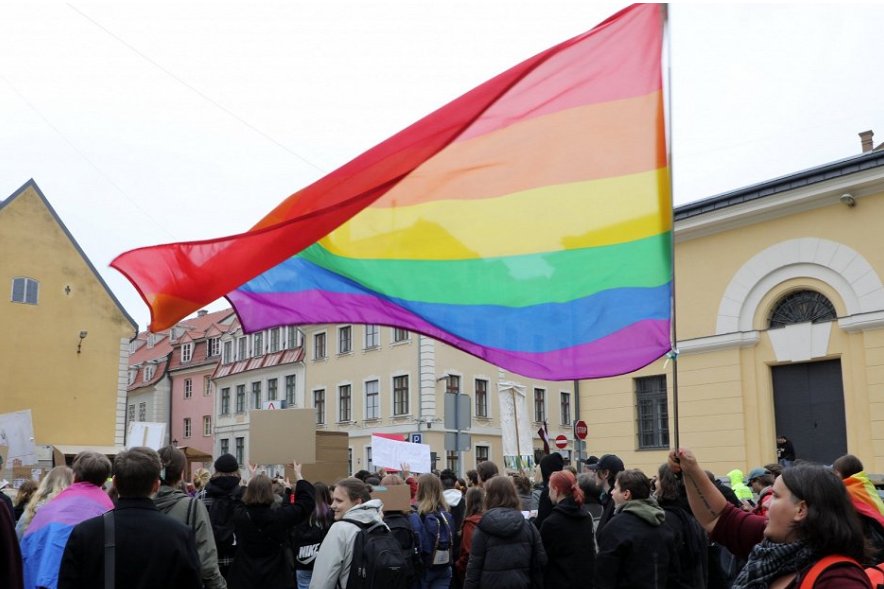
Under this legislation, same-sex partners will gain hospital visiting rights and access to certain tax and social security benefits. However, limitations remain, as highlighted by gay rights activist Kaspars Zalitis. Same-sex couples still face restrictions in areas such as child adoption and inheritance rights. Zalitis views this development as a positive start, noting that Latvia has moved away from being one of the few European Union countries without any legal recognition for same-sex couples.
This legislative step follows Latvia's election of President Edgars Rinkevics in May, who became the first openly gay head of state in the European Union. This was a notable achievement considering the societal attitudes towards LGBTQ+ individuals in Latvia. A 2019 Eurobarometer poll indicated that 45% of Latvians were uncomfortable with a homosexual or bisexual high-ranking official, and 54% were uneasy about having a homosexual or bisexual colleague. Yet, a more recent 2023 Globsec poll showed that 40% of Latvians support legalizing same-sex rights, including marriage.
Justice Minister Inese Libina-Egnere clarified that the parliament's intention was not to equate the rights of civil union partners with those of married couples. The goal, she explained, was to acknowledge and provide a registration mechanism for families outside the bounds of marriage. This reflects a specific type of registered partnership envisaged by the political will.
This legal advancement aligns with a 2020 ruling by Latvia's top court, which mandated the recognition of non-married families. Since then, 46 same-sex couples have successfully petitioned the courts to be acknowledged as family units, according to public broadcaster LSM.
Latvia's move towards legalizing same-sex civil unions mirrors a broader trend in the region, with neighboring Estonia legalizing same-sex marriage earlier in June. This legislation marks a pivotal step towards greater equality and recognition of LGBTQ+ rights in Latvia, acknowledging the diversity of family structures in contemporary society.