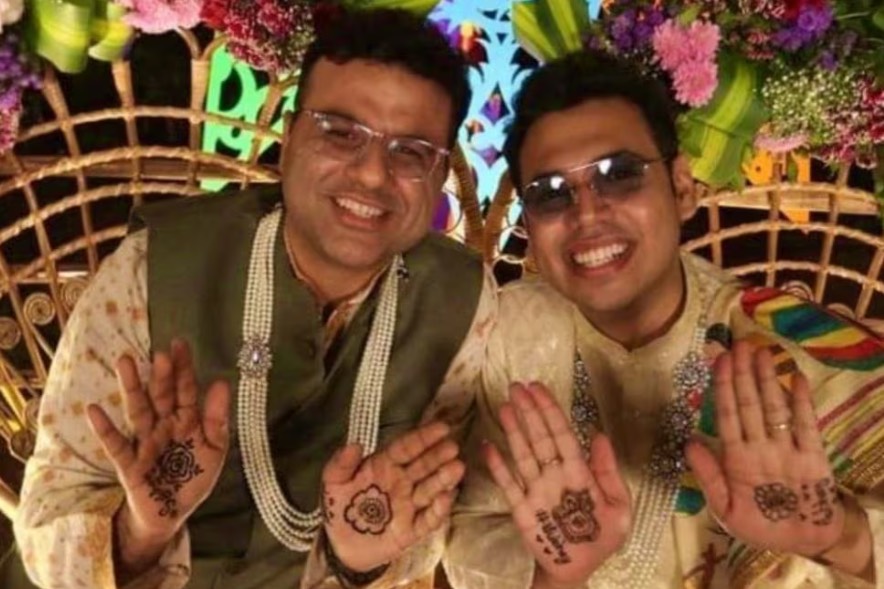
The case, brought forward by 18 couples and petitioners, aimed to secure legal recognition of conjugal rights for same-sex couples. They argued that the current marriage laws, which they deemed discriminatory, violate the equality rights guaranteed by the Indian Constitution. The petitioners also referenced international conventions and laws in other countries that support LGBTQ+ rights.
The government, led by Prime Minister Narendra Modi, opposed these arguments, maintaining that marriage in India is traditionally between a "biological man" and a "biological woman." The government contended that creating or recognizing a new social institution of same-sex marriage is beyond the scope of a fundamental right.
Despite this setback, the Supreme Court expressed willingness to consider granting certain rights to same-sex couples, albeit not recognizing their marriages legally. This decision comes despite the decriminalization of homosexuality in 2018, where the court apologized to the LGBTQ+ community for past ostracism.
Campaigners and petitioners, who had hoped for a favorable ruling, expressed disappointment. Among them, Abhay Dang and Supriyo Chakraborty, two of the first petitioners, voiced their determination to continue fighting for marriage equality. Campaign lawyer Karunu Nundy also expressed her disappointment, doubting the current Parliament's likelihood of passing legislation recognizing same-sex marriage.
The issue of legalizing same-sex marriage in India is intricately tied to various laws related to adoption, inheritance, and personal religious laws. The country's colonial history also plays a role, as British-imposed laws criminalized same-sex relationships and defined marriage as a heterosexual union. These laws persisted even after India's independence in 1947.
The struggle for LGBTQ+ rights in India has been gaining momentum since the late 20th century, despite opposition from religious and conservative groups. Activists argue that the LGBTQ+ population in India is significantly larger than government estimates, potentially representing a substantial portion of the population.
This recent ruling by the Supreme Court marks a critical moment in the ongoing fight for LGBTQ+ rights in India, emphasizing the complex interplay of legal, social, and cultural factors in the pursuit of equality and recognition.