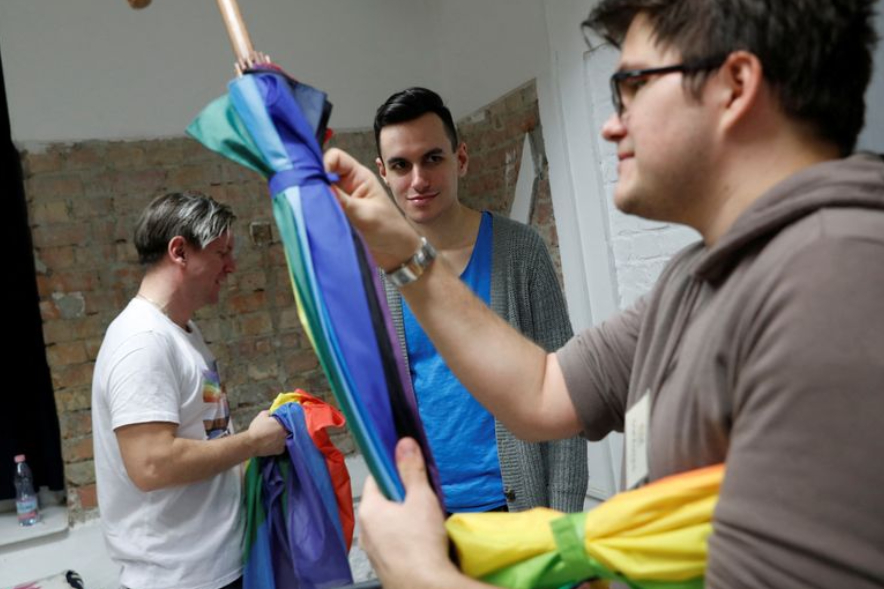
Hungary's Christian LGBT community hopes that Pope Francis' visit to Budapest next week will help to heal wounds in a deeply divided society amid an intensifying anti-LGBT campaign by the country's conservative government. Prime Minister Viktor Orban, a right-wing nationalist in power since 2010, has been targeting gender issues and what he calls LGBT propaganda in his campaign over the past few years, along with migrants, in an effort to promote social policies he says safeguard Christian values against Western liberalism.
During his official visit to Hungary from April 28 to April 30, Pope Francis will preside over an open-air Mass in front of parliament overlooking the Danube River in Budapest. The 86-year-old pope has repeatedly said that LGBT people must be welcomed by the Roman Catholic Church. He said the Church's catechism, or book of teachings, says same-sex attraction is not a sin though homosexual acts are. "All persons are the children of God, all persons. God does not reject anybody, God is a father. And I have no right to expel anyone from the Church," Francis has said.
Akos Marco Modolo, 28, a human rights and LGBT activist who is gay and has been a practicing Catholic all his life, said many LGBT people who are also Christian believers feel shame about their identity and "feel God does not love them". Modolo, who plans to attend the papal Mass on April 30, hopes Francis' tolerant approach to LGBT and all marginalized people will help bridge a rift in Hungarian society caused by what he called the government's anti-LGBT "hate campaign".
According to a 2021 survey by the Zavecz Research institute, 56% of Hungarians were found to be accepting of homosexuality, although Hungary has never allowed gay marriage but recognizes civil unions. During his visit, Francis will meet Hungary's political leaders, including Orban, as well as diplomats, priests, poor people and refugees. The European Commission referred Hungary to the Court of Justice of the European Union in mid-2022 over a law passed in 2021 banning the use of materials seen as promoting homosexuality and gender change in schools.