Amid the ongoing cultural clashes across the nation's classrooms and libraries, there has been a surge in attempts to ban books, with literature featuring LGBTQ themes remaining prime targets.
The American Library Association, in its yearly report on book censorship, recorded 1,269 challenges to over 2,500 books in 2022. This marks the highest number of book ban attempts since the association started monitoring such endeavors in 2001, witnessing a 75% increase from the previous record in 2021.
Out of the 13 books featured in the ALA's "Most Challenged Books" list last year, seven—including three of the top four—were targeted for containing LGBTQ content, as reported by the association.
Deborah Caldwell-Stone, Director of the American Library Association's Office for Intellectual Freedom, stated that the list's strong LGBTQ focus sends a message of exclusion. She explained that it communicates to young gay and transgender individuals that they are not welcome in schools or their communities, and it also signals to the broader LGBTQ community that they are not seen as full citizens with the right to participate in community institutions like libraries.
The ALA revealed that prior to 2020, the "vast majority" of book challenges were initiated by individuals seeking to limit access to a single book their child was reading. However, 90% of last year's challenges were directed at multiple books, and nearly one-fifth of them were initiated by "political/religious groups." The association interprets this trend as indicative of a growing, well-organized conservative political movement intent on removing books about race, history, gender identity, sexuality, and reproductive health from America's public and school libraries that do not align with their views.
In recent years, conservative lawmakers and activists have rallied to limit the inclusion of LGBTQ topics in school curriculums, prevent the display of queer symbols in classrooms, and bar transgender athletes from participating in school sports.
Last week, the Florida Board of Education approved Governor Ron DeSantis' request to extend the state's so-called Don't Say Gay law—which restricts the teaching of sexual orientation and gender identity in public schools—to all grade levels. Previously, the law explicitly applied only to kindergarten through third grade.
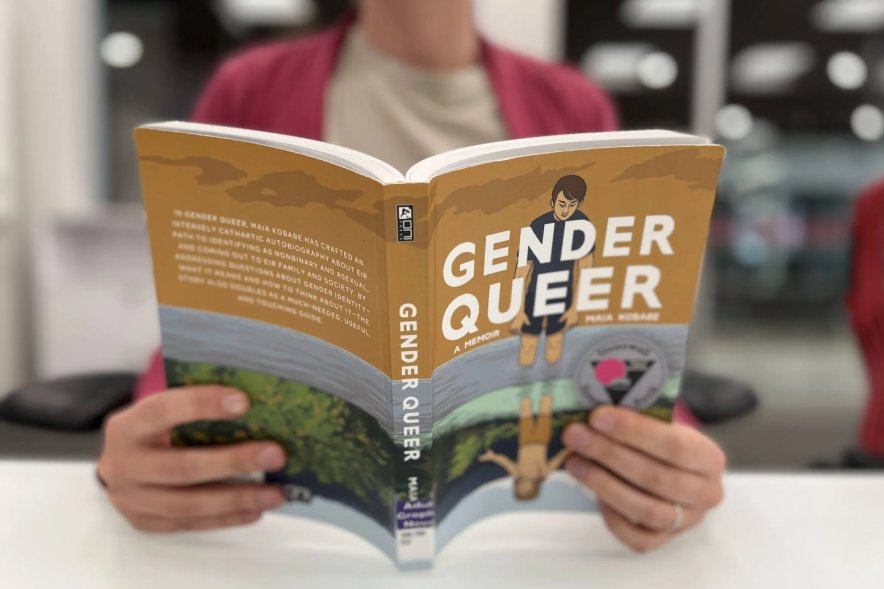
The most challenged book last year was the award-winning memoir "Gender Queer," which also topped the ALA's 2021 list of most banned books. The illustrated memoir, recounting nonbinary author Maia Kobabe's self-identity journey, has experienced unprecedented resistance from school boards and conservative activists nationwide in recent years.
Kobabe, in an email, stated that the removal of a book from a library or defunding a library impoverishes the entire community. Books offer reflections of ourselves and windows into others' experiences. The author noted that "Gender Queer" has served both purposes for different readers, many of whom have contacted Kobabe through hundreds of messages over the years.
In a previous interview with NBC News, Kobabe recognized that some parts of their memoir might not be suitable for elementary school children. However, the author asserted that the book's candid accounts could provide readers with insights into growing up outside cisgender and heterosexual norms.
Other titles featuring in the 2022 list include George M. Johnson's "All Boys Aren't Blue," Toni Morrison's "The Bluest Eye," Mike Curato's "Flamer," John Green's "Looking for Alaska," and Stephen Chbosky's "The Perks of Being a Wallflower."
Caldwell-Stone emphasized that this collection of books, like all others, should remain on library shelves without "fear or favor," adding that everyone is entitled to find books that reflect their interests, experiences, backgrounds, and identities in a publicly funded library that serves all.