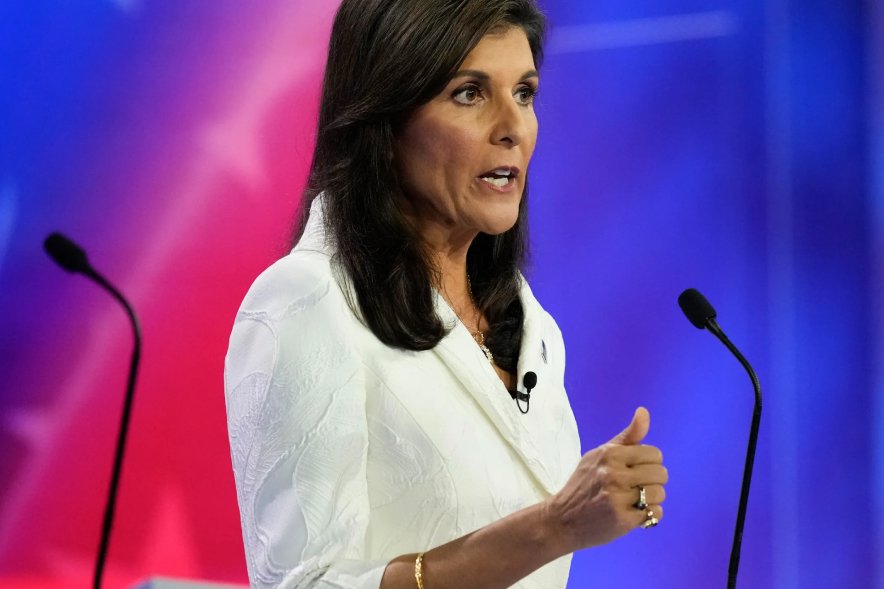
Background: Who is Nikki Haley?
Nikki Haley, a former governor of South Carolina and ambassador to the United Nations, has officially joined the presidential race. Announcing her candidacy in February, Haley is a seasoned politician with significant experience. Her election would mark her as the first female president and the first of Indian descent in the United States.
Haley’s Record on LGBTQ+ Rights
Throughout her political career, Haley has expressed views that have raised concerns within the LGBTQ+ community. As governor, she upheld the state's ban on same-sex marriage, maintaining that marriage should only be between a man and a woman. During her tenure at the UN, Haley voted against a resolution condemning the death penalty for same-sex acts. However, this vote was clarified by state department spokesperson Heather Nauert as being more about the broader implications of condemning the death penalty under all circumstances, rather than a specific stance on LGBTQ+ rights.
Recent Controversial Statements
More recently, Haley has made statements on gender and LGBTQ+ issues that have sparked controversy. She supported Florida Governor Ron DeSantis' "Don't Say Gay" law, which restricts discussions of LGBTQ+-related topics in classrooms, suggesting the law doesn't go far enough. Haley argues that discussions on gender should not be a part of elementary school education. Additionally, she has referred to the participation of transgender individuals in sports as the "women’s issue of our time" and has expressed concern about the impact of transgender girls sharing spaces with cisgender girls.
Poll Standing and Public Perception
In the race for the Republican nomination, Haley currently ranks third in the polls, trailing behind former President Donald Trump and Florida Governor Ron DeSantis. Her favorability rating stands at 34%, with an unfavorability score of 37%.
Haley's candidacy and her views on LGBTQ+ issues are significant in the context of current political debates and policies affecting the community. As the election approaches, her positions on these matters will likely be a key aspect of her campaign and a point of consideration for voters.