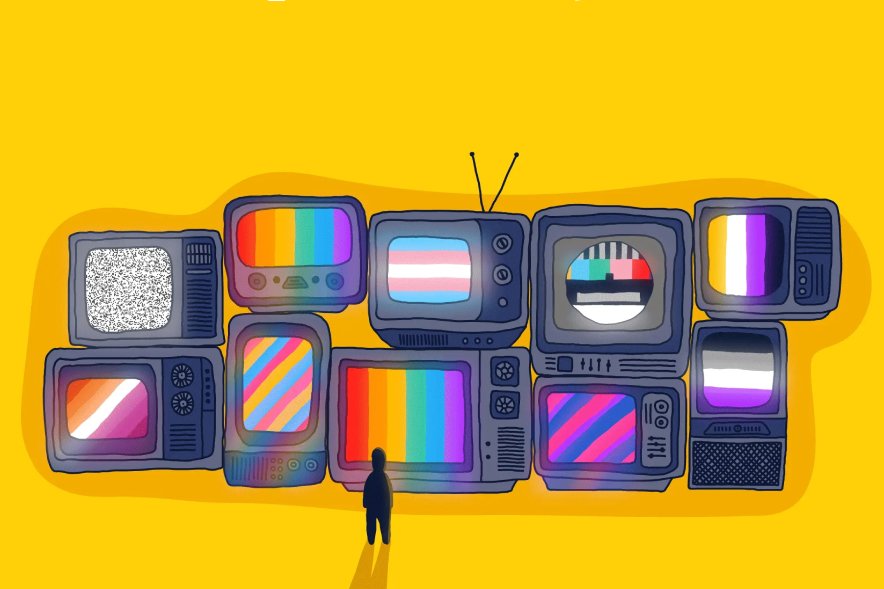
In the ever-evolving landscape of LGBTQ+ representation in media, a recent study conducted by leading charity Just Like Us highlights significant gaps and neglect of pansexual, intersex, and transgender individuals. While strides have been made in mainstream LGBTQ+ visibility through diverse TV shows, films, and books, this research sheds light on the persistent challenges faced by certain segments of the community.
The comprehensive study, part of a larger report exploring the experiences of LGBTQ+ young adults in the UK, surveyed 3,695 individuals aged 18 to 25, with 1,736 identifying as LGBTQ+. The respondents were asked to assess the level of representation of various demographics in the media.
The findings reveal that pansexual, intersex, and transgender representation were consistently identified as the least positively portrayed groups. A staggering 62% of LGBTQ+ young adults expressed that intersex identities were rarely or never portrayed positively in the media. Intersex representation remains scarce, with few notable examples like the character Amy Andrews in the 2000s teen drama "Freaks and Geeks."
Pansexual representation also faced challenges, with 47% of respondents stating that pansexual people were rarely or never depicted positively. While characters like David Rose from "Schitt's Creek" have been hailed as positive representations, conflicts between bisexuality and pansexuality in certain shows have sparked controversy.
Transgender representation also fared poorly, with 48% of transgender young adults reporting rarely or never encountering positive portrayals. Although some progress has been made, such as the casting of trans actors in popular TV shows, the overall landscape still lacks comprehensive and consistent representation.
The survey also noted that LGBTQ+ young adults tended to perceive their own demographic as more negatively portrayed compared to non-LGBTQ+ young adults. This emphasizes the importance of authentic storytelling and representation by members of the LGBTQ+ community themselves to establish a genuine connection with LGBTQ+ viewers.
Amy Ashenden, interim CEO of Just Like Us, stressed the significance of positive media representation in shaping the experiences and self-perception of young people. She highlighted how media portrayal not only benefits LGBTQ+ individuals but also fosters understanding and empathy among non-LGBTQ+ individuals.
While progress has been made in LGBTQ+ media representation, this research serves as a reminder that the journey toward authentic and inclusive portrayal is far from over. Continued efforts and a commitment to amplifying underrepresented voices are essential to creating a media landscape that truly reflects the diversity of the LGBTQ+ community.