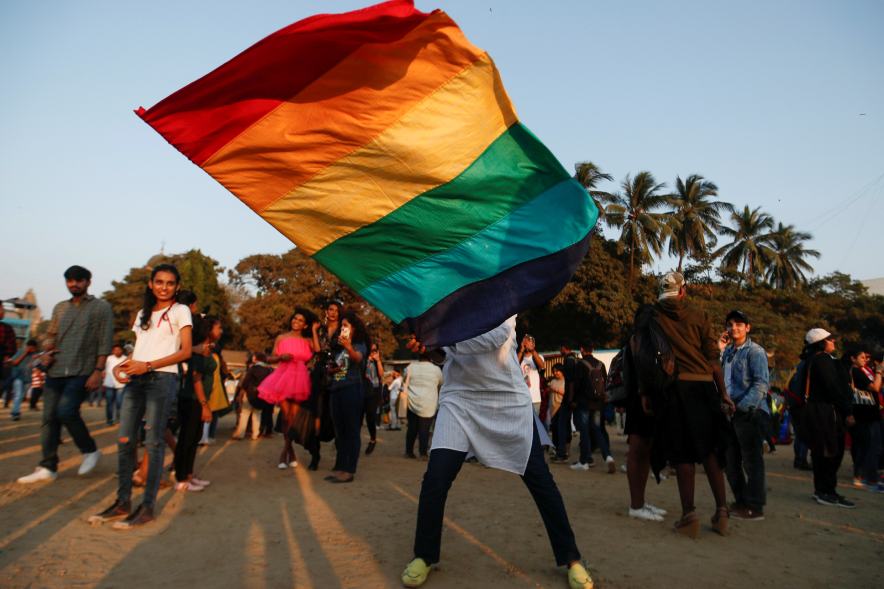
The Indian government has sparked controversy by opposing the legalisation of same-sex marriage, calling it an “urban elitist concept” that undermines religious and social values, as the supreme court begins hearings on the rights of LGBTQ people to be married under the law. The government’s submission argues that any equality offered to same-sex couples goes against religious values and “seriously affects the interests of every citizen”, and that such a decision should be made by parliament, not the courts.
The Supreme Court is hearing dozens of petitions from LGBTQ couples and activists as part of a collective lawsuit that is battling for the right of LGBTQ people to be married and have equality under the law. The case has implications not just for LGBTQ couples, but also for equality for all under the constitution, including the right to marry whoever you choose regardless of gender, religion, or caste.
If same-sex marriage is legalised in India, it will only be the second country in Asia after Taiwan to do so. While the country has experienced a gradual societal shift towards greater acceptance of LGBTQ people, particularly in popular culture and in pride marches held in major cities, there is still a long way to go in terms of full social acceptance and safety from stigma and harassment, as the country remains deeply traditional and patriarchal.
One of the couples fighting the case is Kavita Arora and Ankita Khanna, a couple from Delhi who have been together for 11 years, after working together and eventually falling in love. Their motivation for bringing the case is both practical and principled, with the need for a joint bank account, the ability to give each other medical consent, and legal recognition for inheritance, as well as the belief that India as a democracy is a place for diversity, equality, and justice for all, and under the constitution, their rights are no less than others.
The case is pushing for the rights of trans people to have their relationships and families of their choice legally recognised, arguing that it goes against a previous judgment by the supreme court. The right to adopt children by same-sex couples is also being discussed in the case, which has been opposed by the national commission for protection of child rights, which says that “allowing adoption to same sex couple is akin the endangering the children.”
While the Modi government has submitted a strongly worded affidavit to the supreme court expressing its opposition to same-sex marriage and seeking to get the case thrown out of the court, lawyers and petitioners remain optimistic about the case. They emphasise that the supreme court has made several significant rulings on LGBTQ rights, even in the face of government opposition, including a 2014 case which recognised transgender people as a “third gender”. However, the denial of marriage to LGBTQ people “makes a mockery of our constitution and makes us second class citizens,” according to Zainab Patel, a trans woman who is among the petitioners.