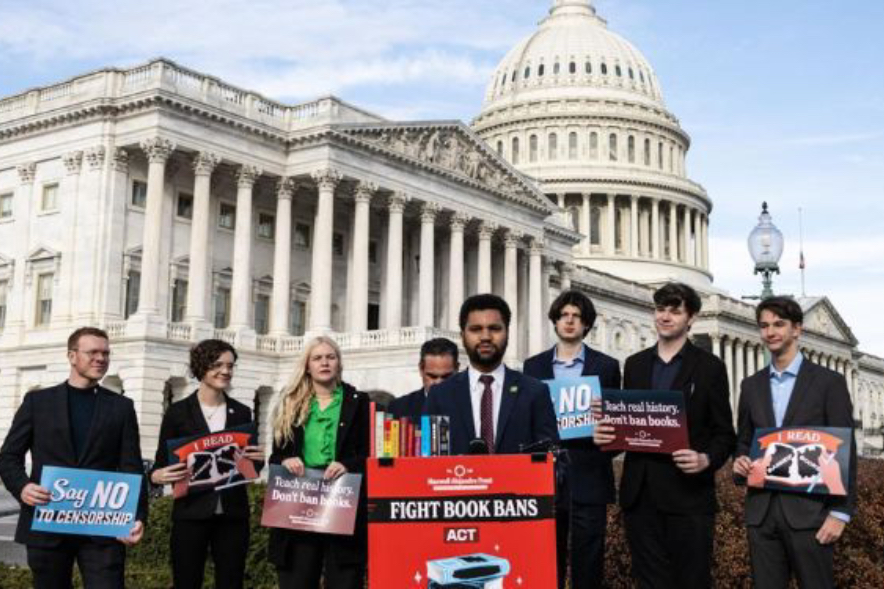
The "Fight Book Bans Act" is designed not to directly halt book bans but to assist school districts financially during the book review process when challenges arise. It proposes an allocation of $15 million over the next five years, with grants of up to $100,000 per district, managed through the Department of Education. This funding aims to alleviate the substantial costs that school districts face when handling book challenges, which can range from hundreds to tens of thousands of dollars.
One notable case highlighted in the proposal was in Berkeley County, South Carolina, where the district incurred over $6,000 in expenses to acquire half of the 93 books challenged by an individual from Moms for Liberty, a conservative advocacy group.
In a press release, Rep. Frost emphasized that book bans across various states, including Florida, Texas, Utah, and Missouri, represent a direct attack on freedom and education. He stated, "What we are seeing...are loud and clear attempts by far-right conservative leaders to silence and erase our Black, brown, Hispanic, and LGBTQ+ communities." The "Fight Book Bans Act" intends to counteract these efforts, protecting libraries, history, and educational integrity.
Several anti-censorship and anti-discrimination organizations back the bill, including PEN America, ACLU National, American Library Association, and The Trevor Project, among others.
At the Capitol press conference, Rep. Jamie Raskin, a co-sponsor, compared the book ban campaigns to tactics used by authoritarian regimes and highlighted their focus on censoring books related to racism, white supremacy, and LGBTQ+ issues. He expressed pride in joining Rep. Frost to introduce this legislation.
Support for the bill extends to congresspersons from Pennsylvania, including Philadelphia Congressman Dwight Evans and Rep. Sunny Lee. Evans, a longtime supporter of LGBTQ rights, emphasized the bill's importance in defending students' rights to learn about LGBTQ history and other topics facing censorship.
The bill's success in Congress remains uncertain due to the Republican majority in the House and the openly homophobic stance of House Speaker Mike Johnson. However, the landscape could change with potential shifts in the House's composition following the 2024 elections.